




01
No Digital Reading Experience
Readers could not access daily editions via smartphone or computer and still relied on physical distribution.
A mobile-first PWA that brings the daily edition of Tanjungpinang Pos to digital devices. Readers can open the newspaper with a page-flip experience, access edition archives, subscribe online, pay through virtual accounts, and manage accounts and transactions without downloading an app from an app store.
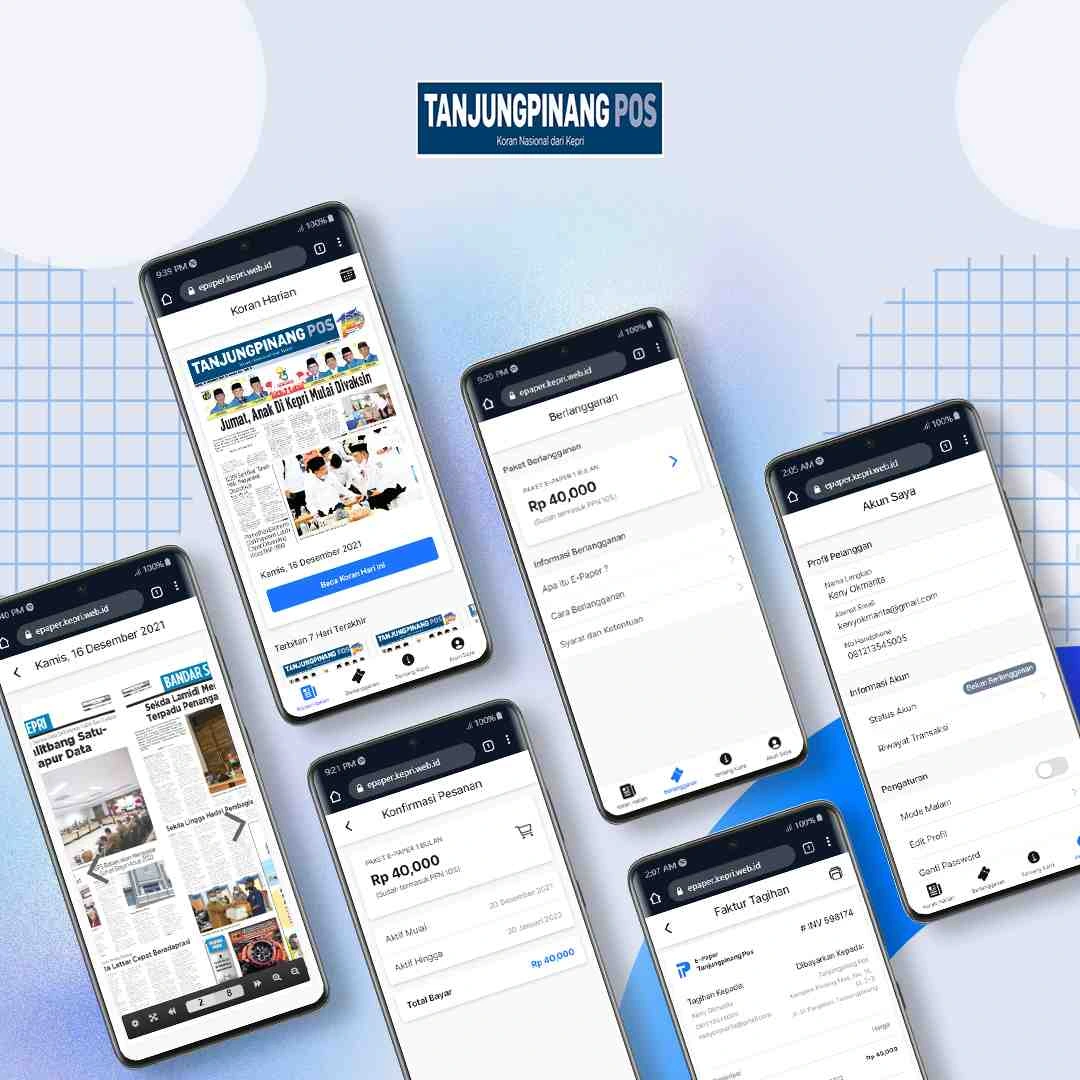
Tanjungpinang Pos is a regional daily newspaper serving readers in the Riau Islands. As reading habits shifted to smartphones, the print edition needed a digital channel that preserved the newspaper format while supporting subscription and daily publishing operations.
The print edition had readers accustomed to the newspaper format, but there was no digital experience that could preserve that reading pattern. On the business side, subscription, payment, and publication management also lacked a connected digital workflow.
Readers could not access daily editions via smartphone or computer and still relied on physical distribution.
There was no flow to sell digital access, manage customer accounts, process online payments, and issue invoices.
The team had no dashboard to manage editions, monitor publication status, transactions, and subscriber activity in one place.
Solunesia built a PWA that combines the newspaper reading experience, subscription system, checkout and payment, customer accounts, edition archive, and operational dashboard. The platform structure was designed mobile-first so readers can access the newspaper from a browser without losing the defining character of the print edition.
The reader retains the original newspaper layout with page-flip navigation and zoom. Beyond the reading experience, the platform handles the customer lifecycle from selecting a plan, paying, receiving an invoice, to viewing transaction history and account status.
Daily editions retain the print layout with page navigation, zoom, and access to the latest edition.
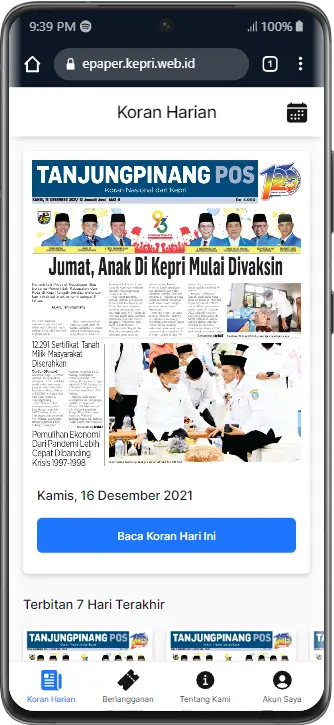
Plan information, terms, and the subscription process are presented in a clear flow before checkout.
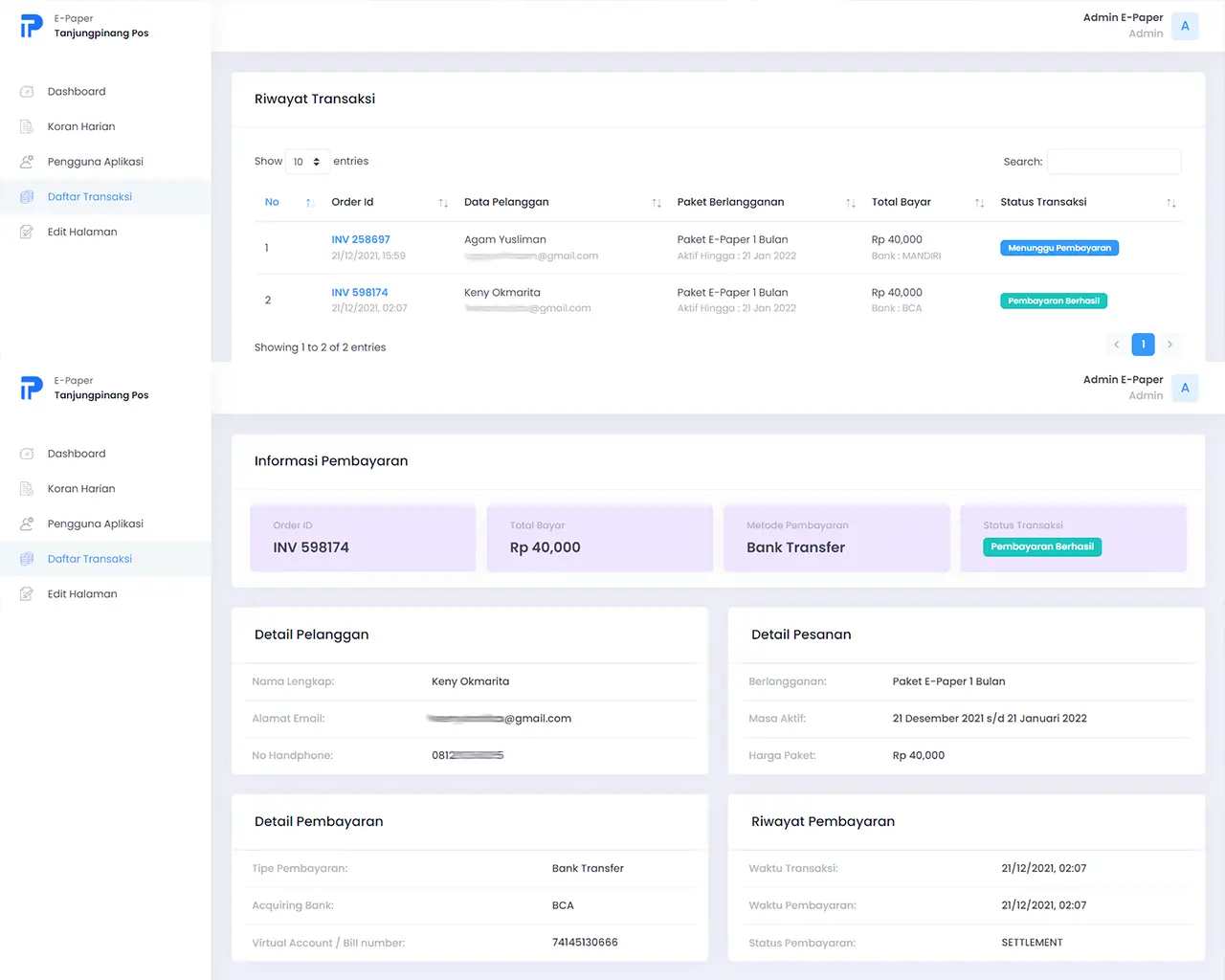
Virtual account, digital invoice, transaction history, and account status are connected to customer access.
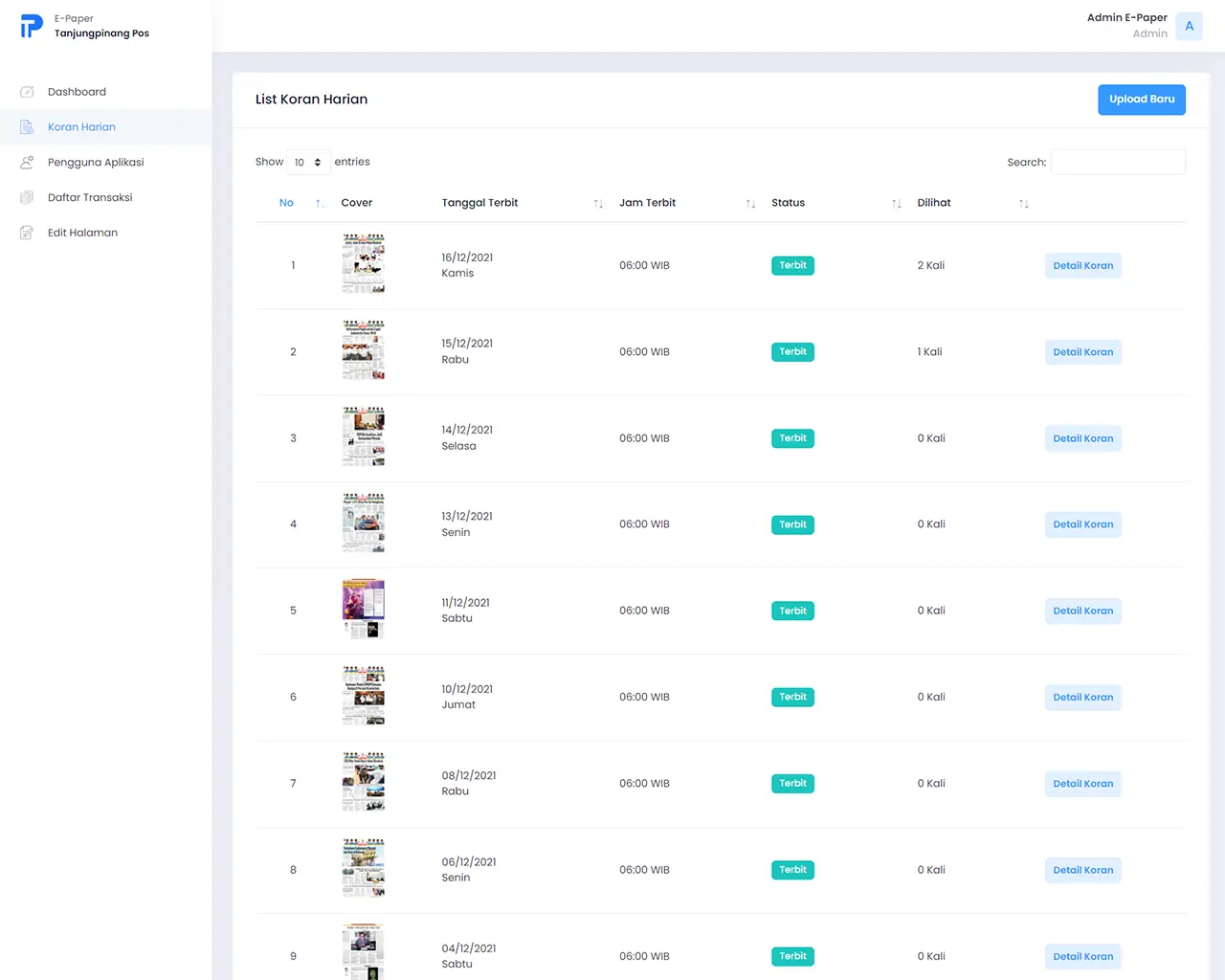
The team manages edition publishing, scheduling, views, transactions, and subscriber search from an internal dashboard.
The subscription process is designed as a sequential journey from viewing an edition, selecting a plan, completing payment, to having the customer account ready to use.
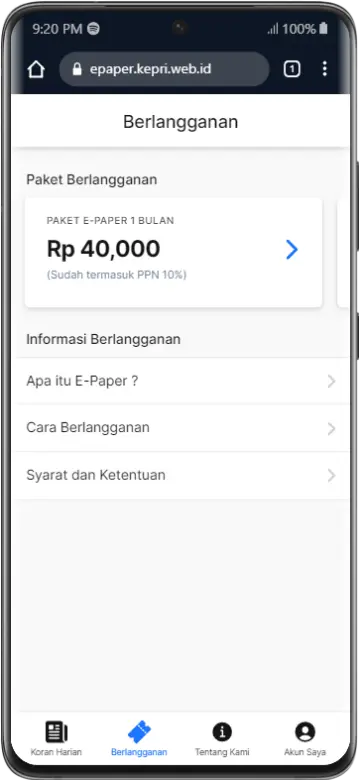
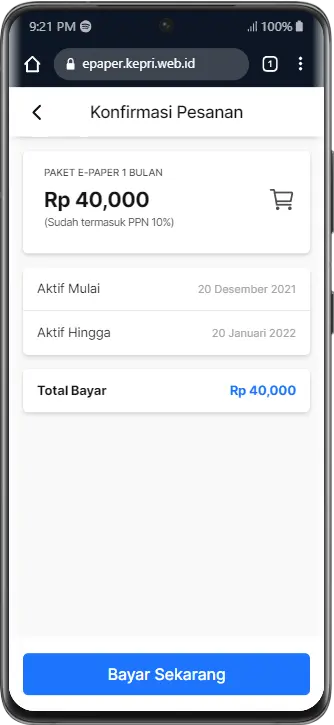
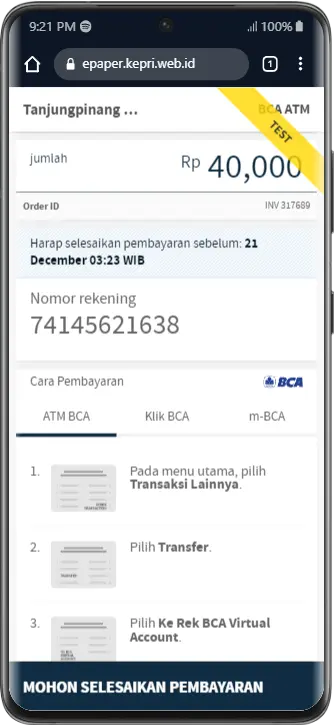
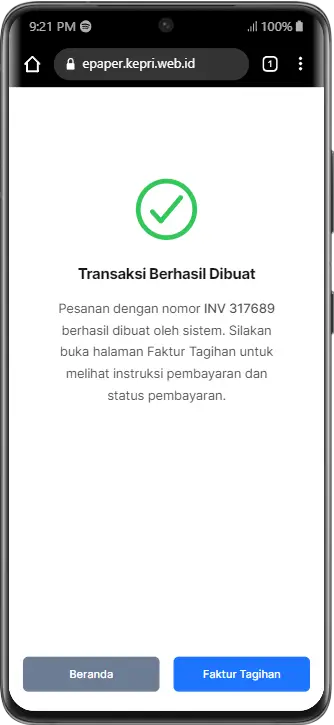
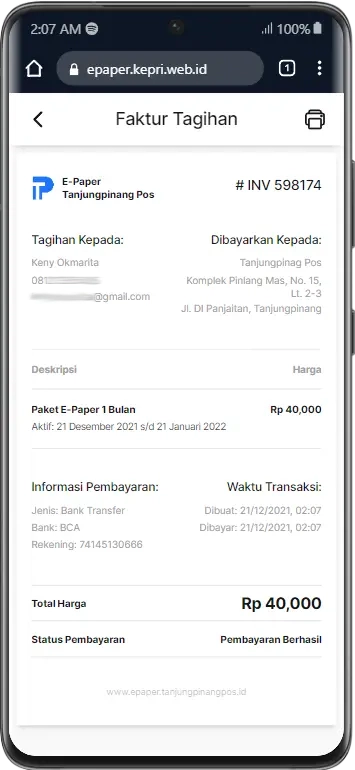
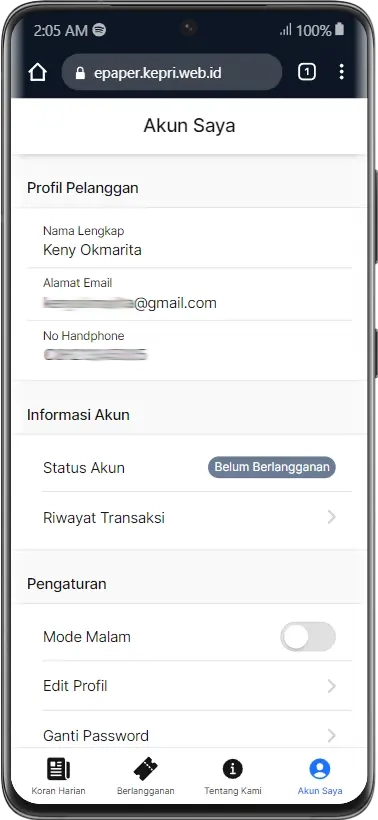
Checkout is connected to a payment gateway that processes virtual accounts automatically. Readers select a payment channel, receive a VA number, complete the transfer, and the system confirms payment, issues a digital invoice, and activates subscription access without manual intervention. Transaction status and order history are stored in the customer account.
The public platform requires a backend that follows the daily publishing rhythm. The dashboard is used to publish editions, manage schedules, view edition performance, and monitor transactions and subscribers.
The editorial and business teams work from a single dashboard. New editions can be published or scheduled, while transactions and order status can be monitored without switching to a separate system.
Since its release in 2021, Tanjungpinang Pos has a digital channel for reading, subscribing, paying, accessing archives, and managing publications through one platform.
Editions can be published every day at 06:00 WIB and accessed via smartphone from any location.
Page-flip maintains the original newspaper layout so the shift from print to digital still feels familiar.
Readers can select a plan, pay through a virtual account channel, and get account access after payment.
The editorial team can manage editions, schedules, views, subscribers, and transactions from the same dashboard.
Start with the content format, publication frequency, readership, subscription model, and editorial processes already in place.
We help connect the reading experience, subscription, payment, customer accounts, and the team's operational needs.
Once the workflow is clear, features, payment integrations, admin, and implementation phases can be structured more effectively.