



01
Membership Requires In-Person Visit
Registration requires residents to visit the location, take photos on-site, and wait for a physical card.
An integrated digital platform for the Library and Archives Agency of Riau Islands Province connecting public catalog search, digital membership, MARC cataloging, barcode label generation, collection circulation, through to operational reporting.

The Library and Archives Agency of Riau Islands Province manages public library services with a province-scale collection. Its services include catalog access, membership, collection lending, library material processing, information publishing, and internal reporting for the community and library staff.
The collection and service scale is already large, but several processes still depend on physical presence and manual work. Residents lack adequate catalog access, while staff need more structured workflows to manage collections and transactions.
Registration requires residents to visit the location, take photos on-site, and wait for a physical card.
Residents struggle to check titles, subjects, categories, and collection availability before visiting the library.
Metadata input, verification, barcode generation, and label preparation need a more consistent workflow.
Catalog, circulation, membership, publishing, and reporting need to work from the same data source.
Solunesia built two interconnected system layers: a public portal for resident self-service and a Library Management System for staff operations. Both use the same data so public information and internal processes stay consistent.
The public portal handles OPAC search, membership, loan renewal, information, and service communication. On the internal side, the LMS manages MARC cataloging, data review, barcode labels, circulation, publishing, and reports with role-based access.
Collection search, membership, renewal, information, and resident self-service.
Cataloging, processing, circulation, publishing, statistics, and operational reporting.
Seven user roles separate responsibilities by service function and staff duties.
Collection changes and service status can flow from internal processes to the public portal.
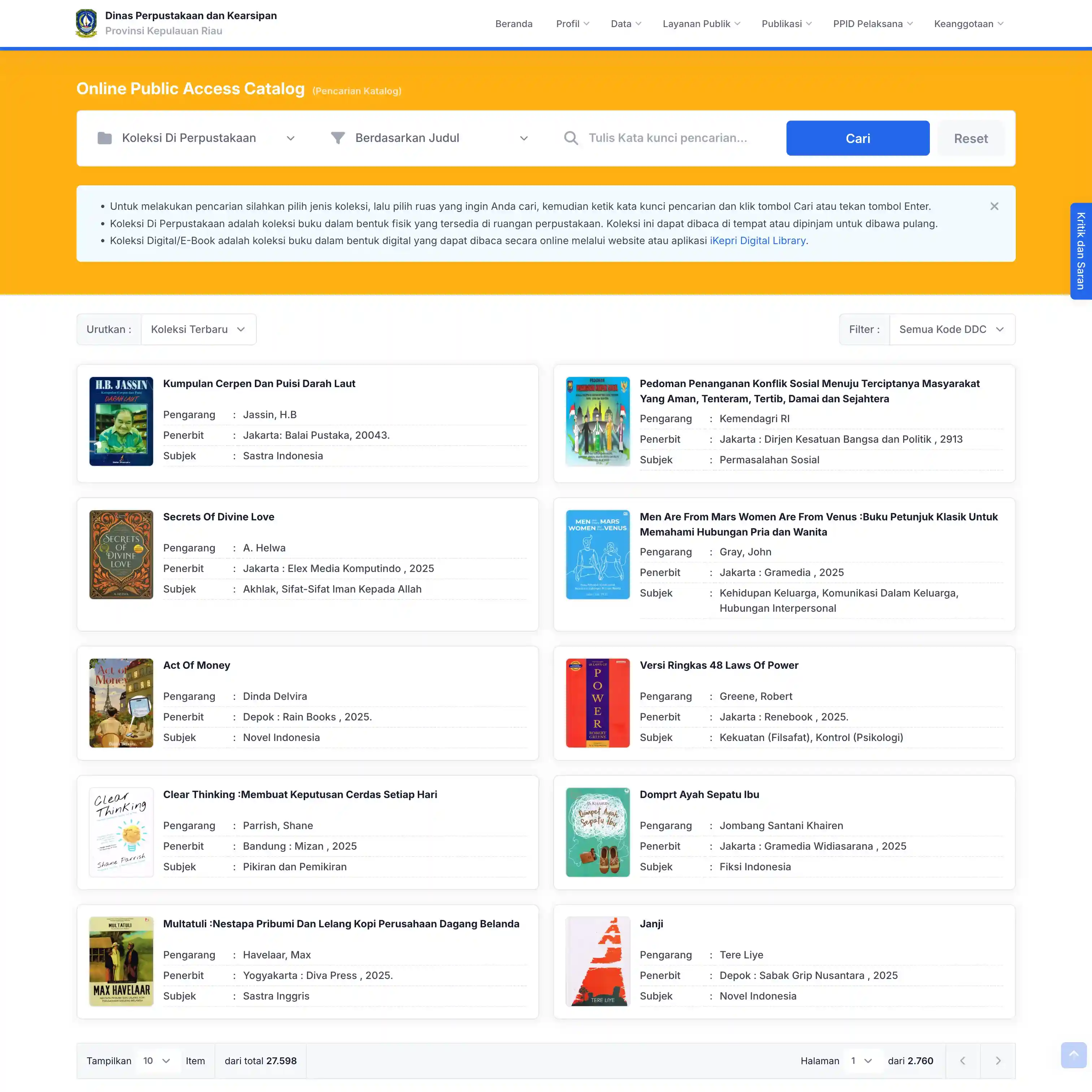
Residents can search the collection by title, author, subject, and DDC category without needing to understand the library's internal cataloging process.
OPAC is designed as the main gateway for discovering collections. MARC metadata managed by staff forms the basis of public search, including DDC category filters and multi-parameter search.
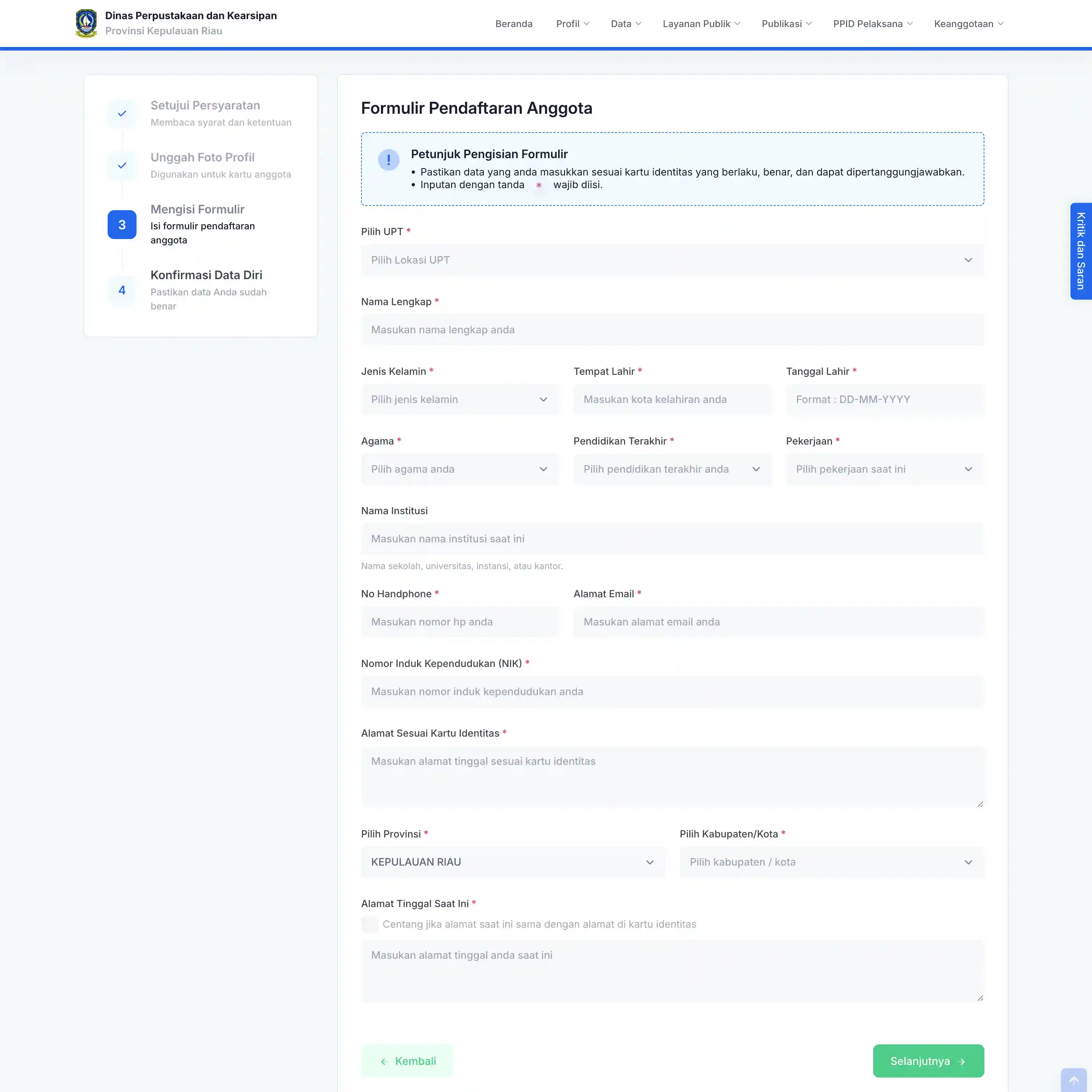
Registration previously dependent on a physical counter moved to an online process, so residents across Riau Islands can apply for membership without traveling to Tanjungpinang.
Visit the library, take a photo at the counter, wait for a physical card, and limited to service hours.
Register from any device, upload your own photo, and receive a digital membership card via WhatsApp.
Collection processing is built as a structured workflow from metadata input through to books ready for shelving. Data is not just recorded but goes through a review process before being published to OPAC.
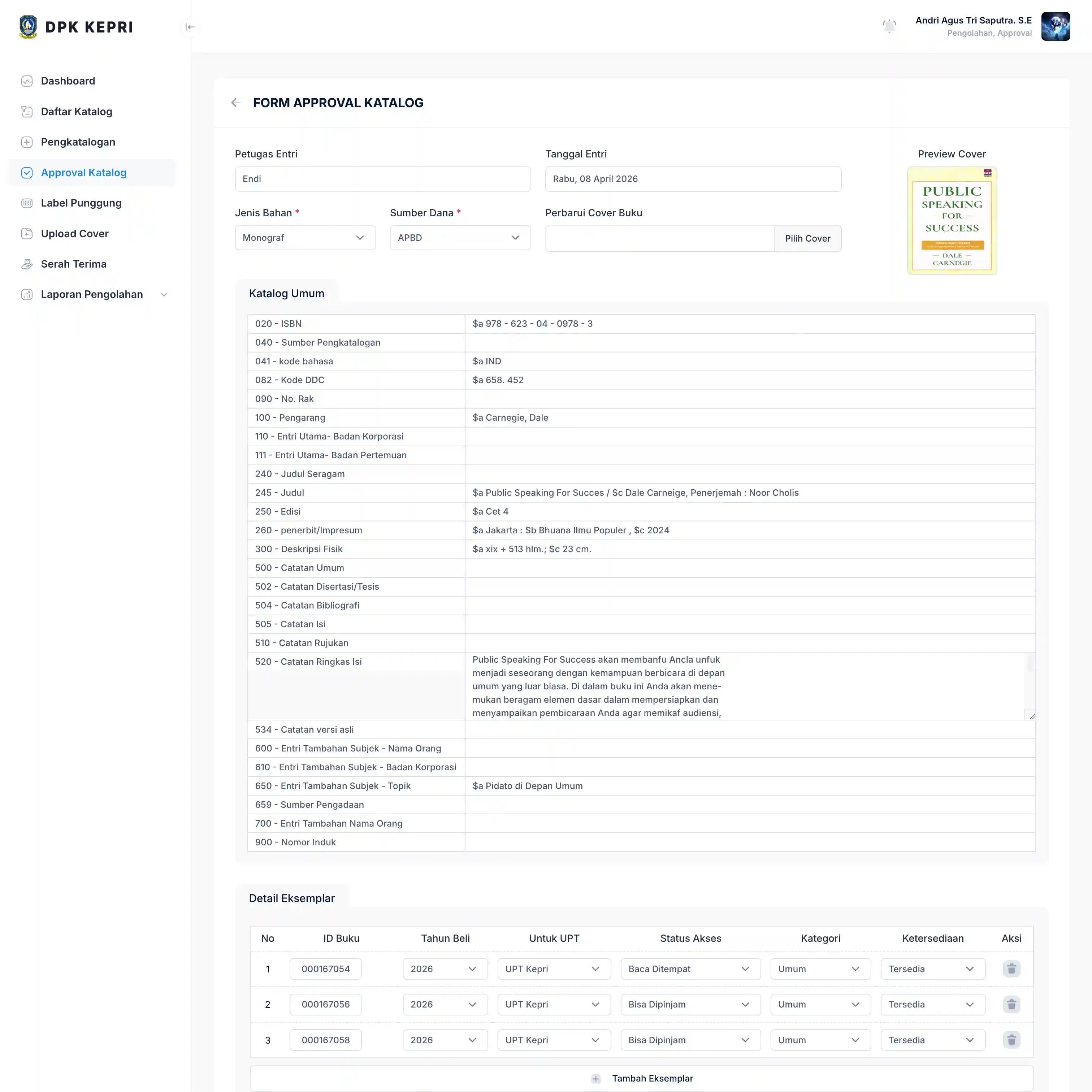
Metadata such as ISBN, DDC, author, edition, publisher, subject, copy count, and cover is managed through MARC forms. Records created by staff go through a two-stage verification before being published to OPAC.
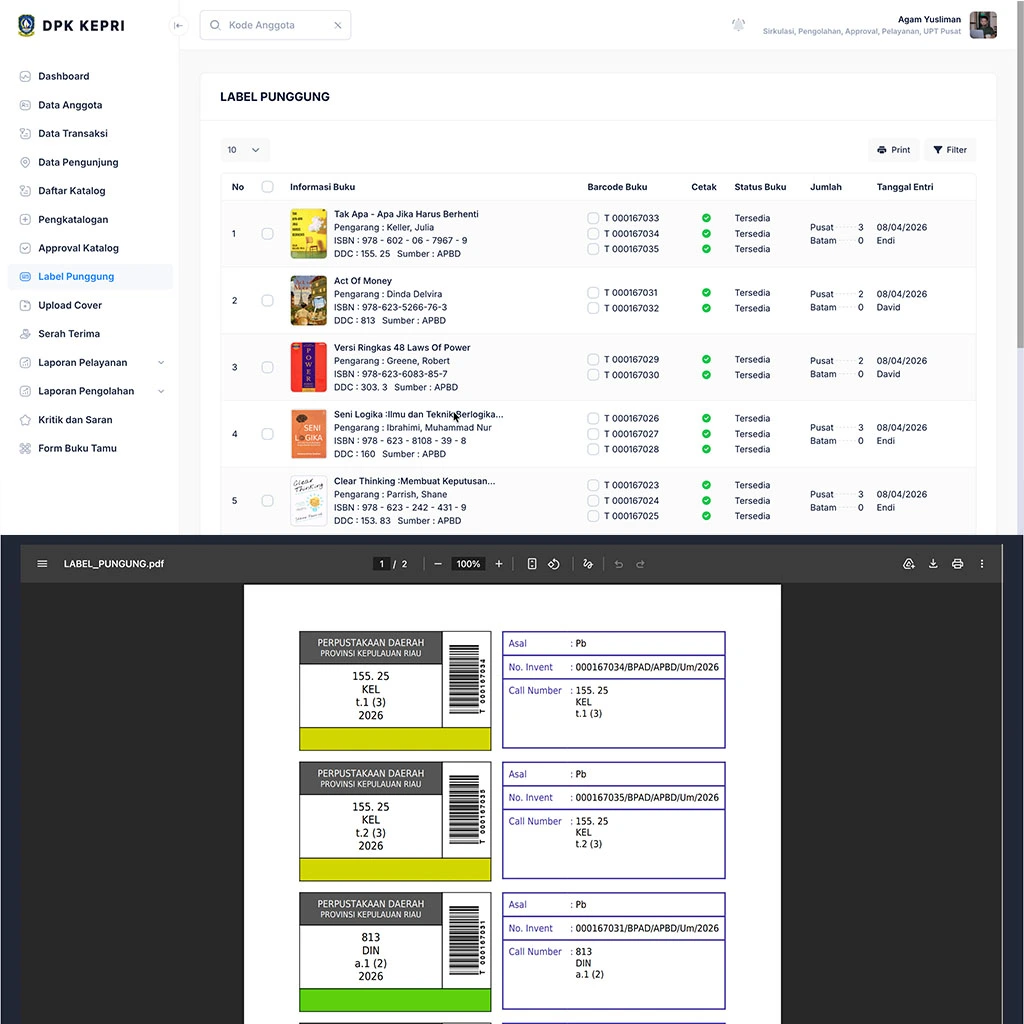
The system generates print-ready labels containing DDC call numbers, copy numbers, and inventory identifiers. DDC spine labels can also be created to help with physical collection placement and retrieval.
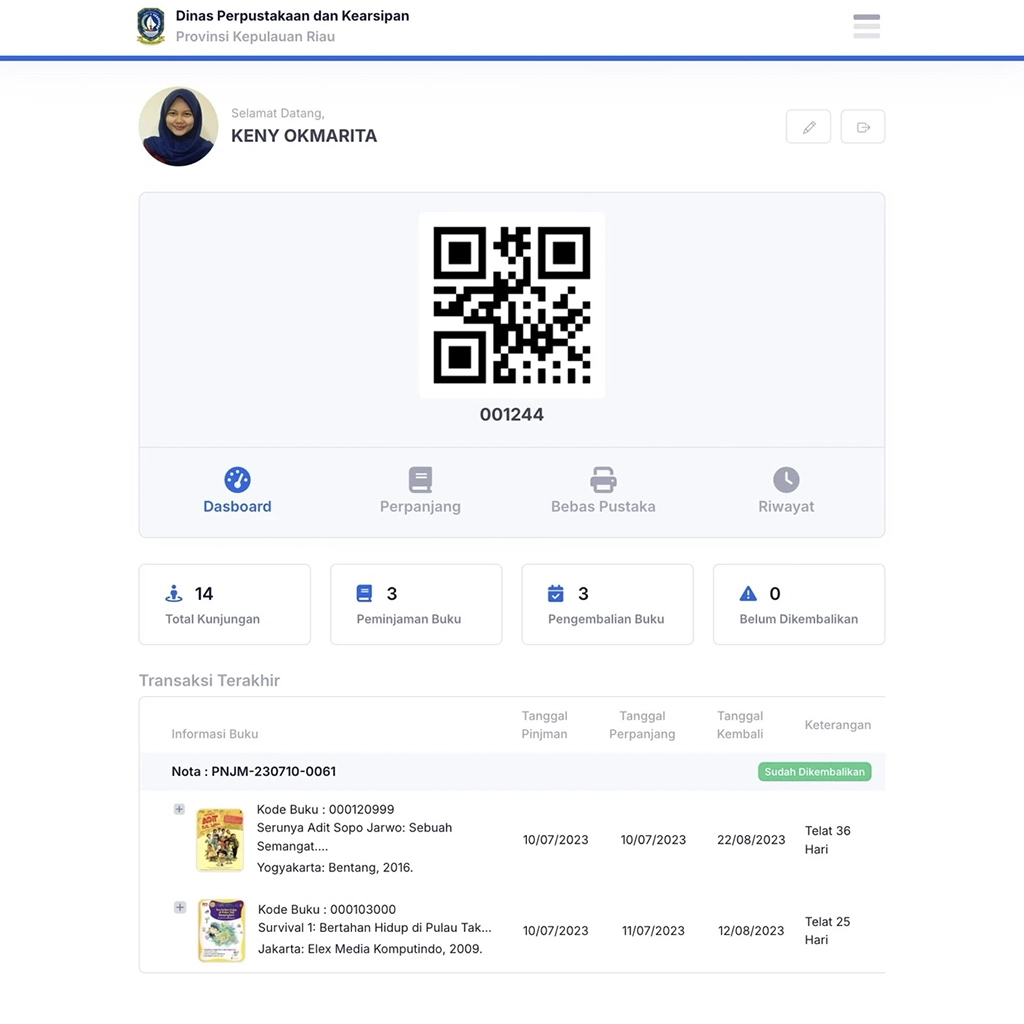
Member activity and collection transactions are recorded in the same system, so lending, returns, membership, and reporting data does not need to be compiled from multiple sources.
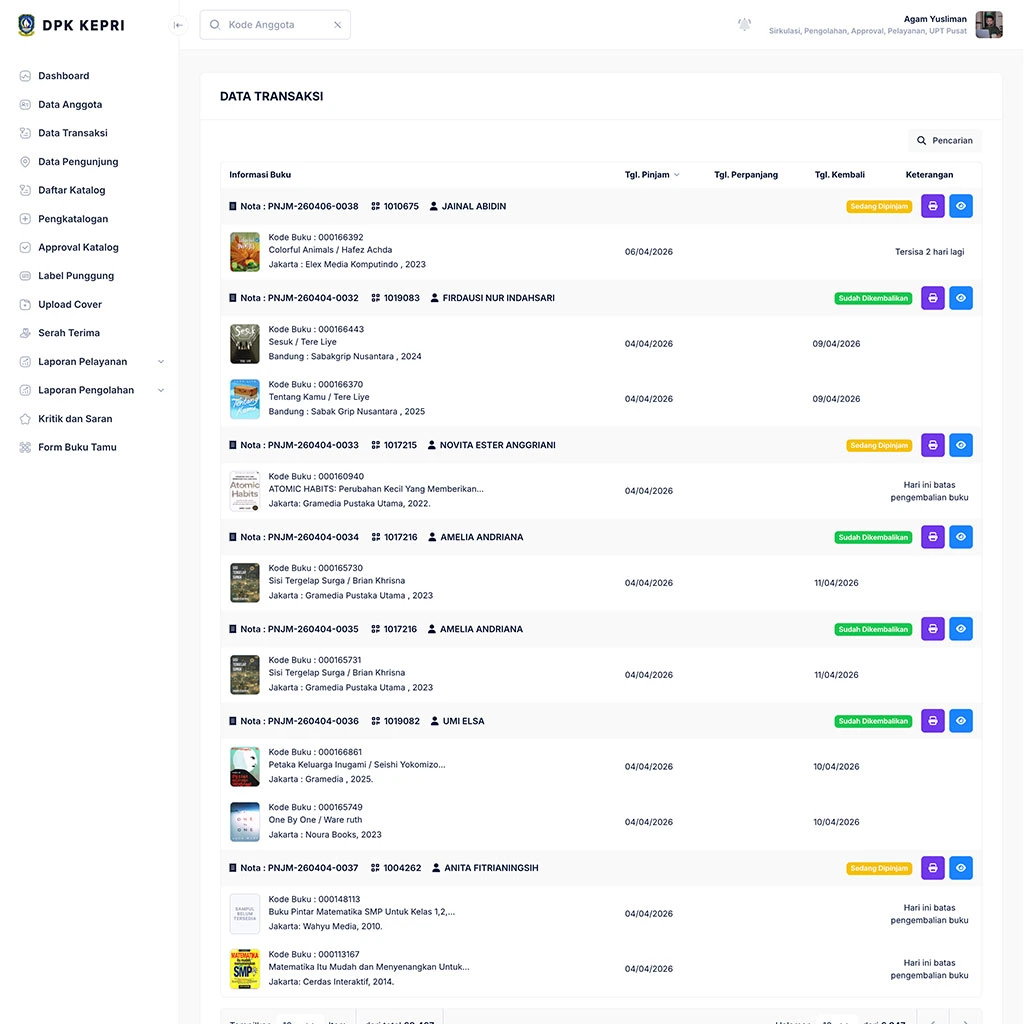
Lending and returns are connected to member and collection data.
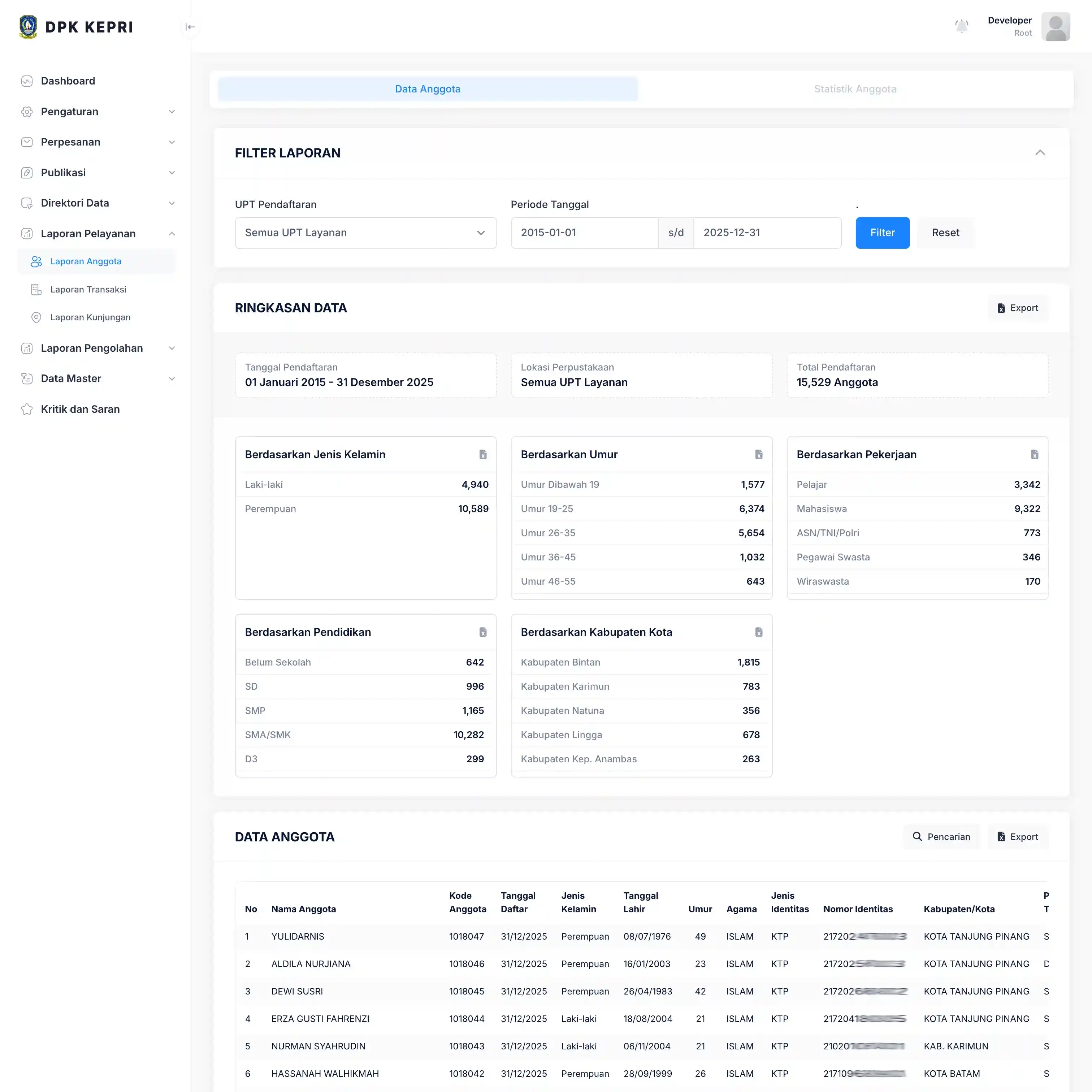
Member data can be monitored and summarized without manual recap processes.
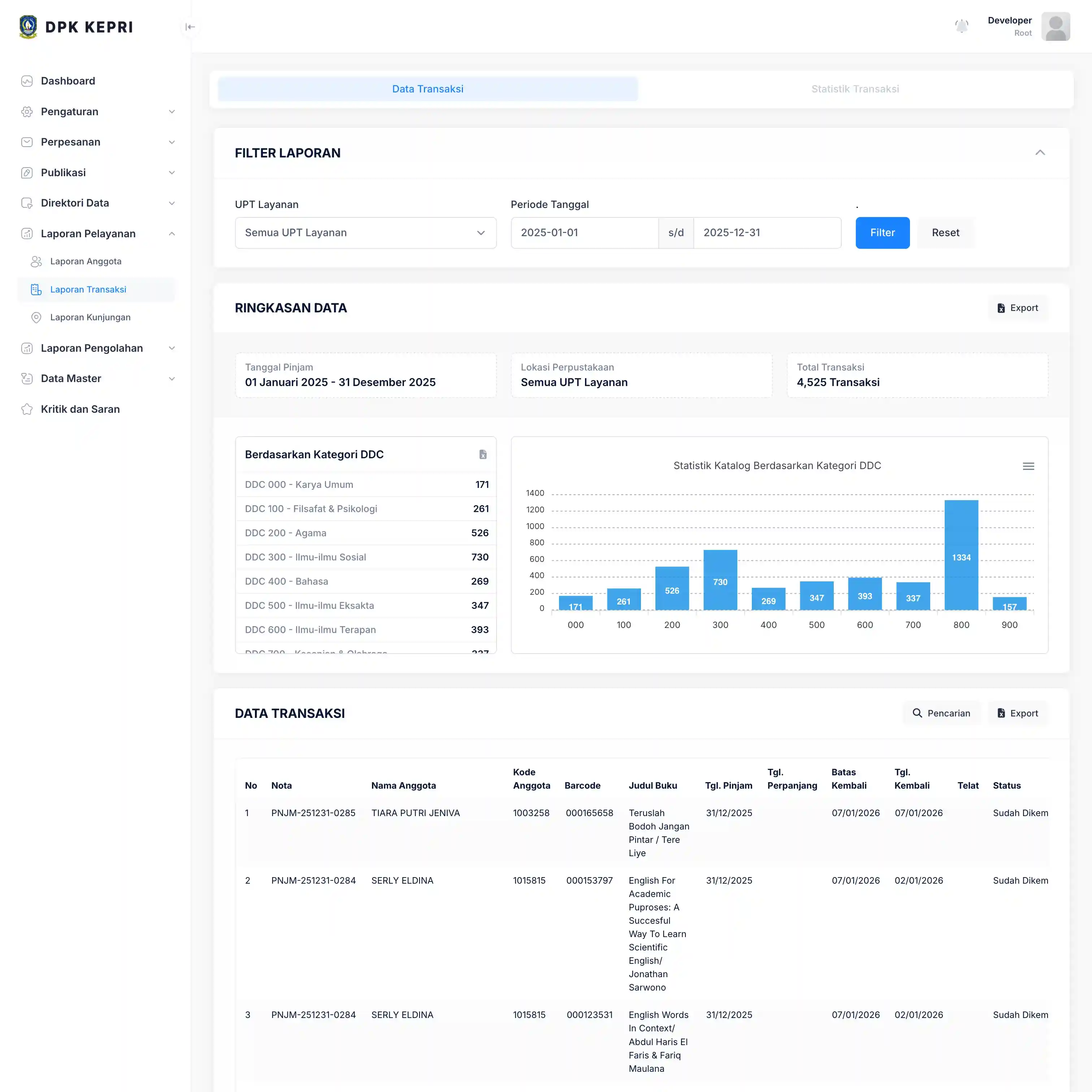
Transactions and service activity can be displayed from recorded data.
The public portal is not just a service interface but is also built to make library information more discoverable through organic search and accessible from mobile devices.
Organic traffic entering the portal from Google search results.
How many times portal pages appeared in Google search results.
Average position of the portal in Google search results pages.
The majority of visitors access the portal from mobile devices.
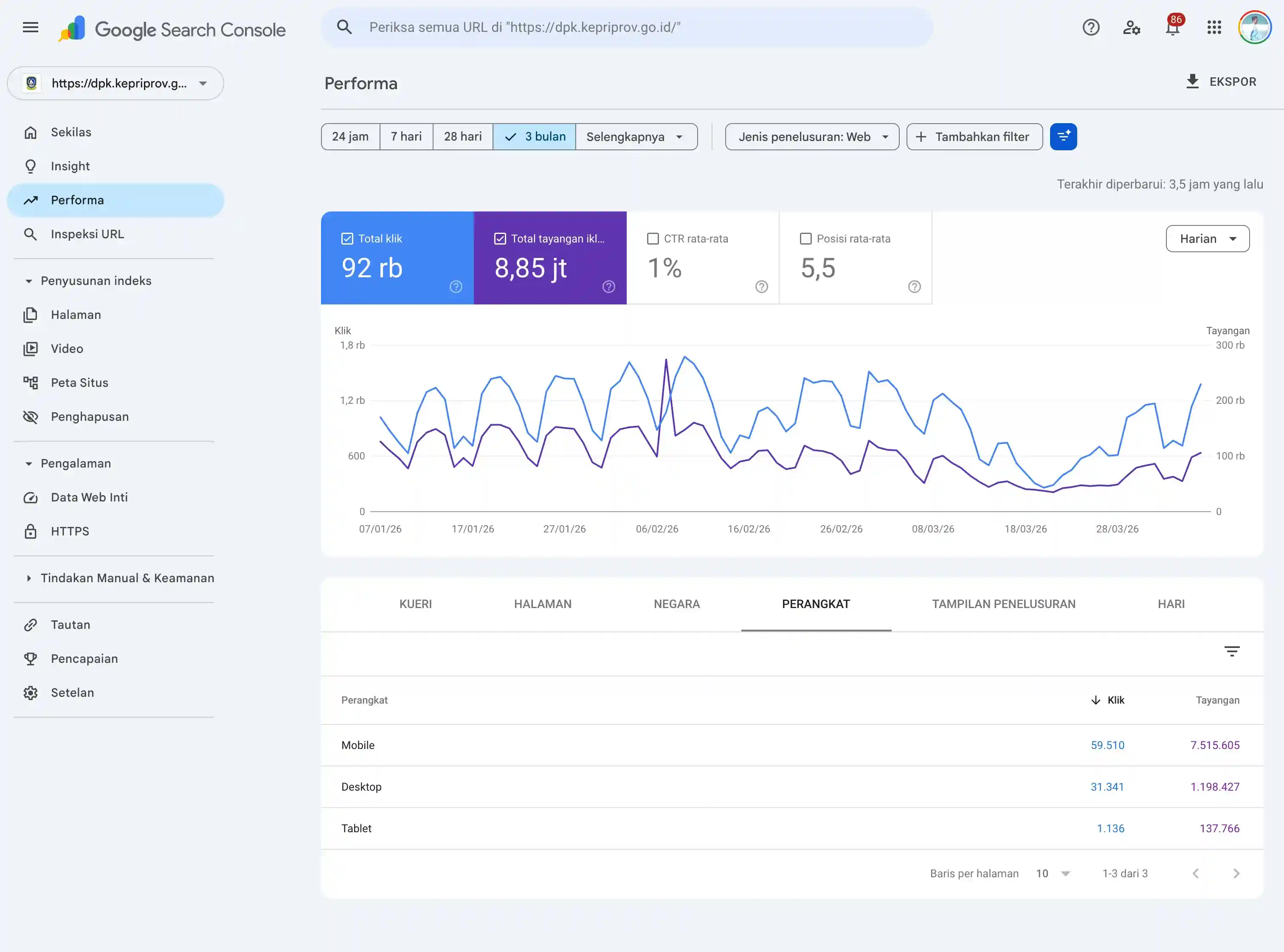
Data from Google Search Console shows the portal's organic visibility growth since launch. Library information is now easier for residents to find through online search.
Digitalization expanded public access while making internal work more structured. The impact is visible in membership services, collection search, data processing, reporting, and library service visibility.
Residents from 7 regencies/cities can register without traveling to Tanjungpinang.
OPAC opens collection search with DDC filters and structured metadata.
MARC, review process, barcode, and labels run as one workflow before collections are published.
The portal recorded organic traffic growth of approximately 300-500% and expanded public service reach.
Start with public services, internal processes, data, documents, and systems already in use.
We help identify processes that need to be connected, simplified, or made accessible online.
Once requirements are clear, modules, integrations, user access, and implementation phases can be structured more effectively.